Events archive
-
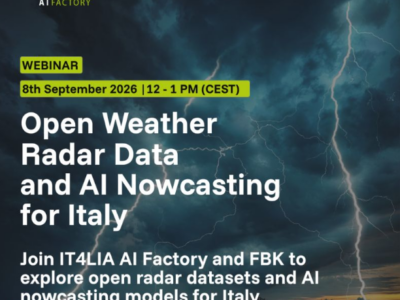 How can artificial intelligence and high-performance computing (HPC) transform meteorological and climate data into useful tools for business, research and risk management? The webinar, held in English and organised by IT4LIA AI Factory in collaboration with the Bruno Kessler Foundation (FBK) and EuroCC Italy, will feature presentations by Gabriele Franch and Alessandro Camilletti from FBK.
 -
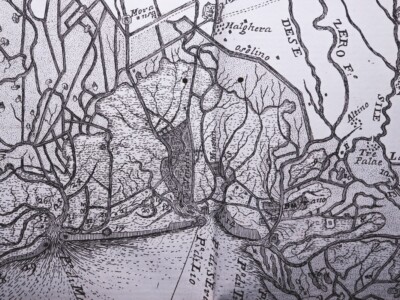 The 3rd SISAm Conference on Environmental History, organised in part by FBK-ISIG, offers a comprehensive overview of the academic work of Italian and international scholars in the field of environmental history.
 -
 In his invited talk at IJCAI - ECAI 2026 Luciano Serafini will provide an overview of the main motivations, research challenges, and methodologies in neuro-symbolic AI, then focus on Logic Tensor Networks.
 -
 Martino Bernard will be one of the speakers at the 2nd edition of the International College on Modern Applications of Optics and Photonics (MAOP2026).
 -
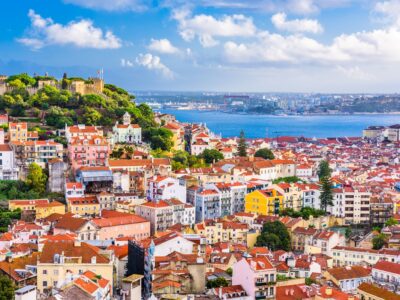 Co-located with the 11th IEEE European Symposium on Security and Privacy (EuroS&P 2026), the workshop aims at exploring security and risk assessment in identity management systems
 -
 World Models are a rapidly growing area of contemporary AI: systems that generate video and interactive environments as synthetic training worlds for robots. This talk opens up this new technical and media form to historical critique.
 -
 Electronic health records, telehealth platforms and IA are fundamentally reconfiguring clinical space and time — with far-reaching implications for healthcare chaplains. This presentation discusses current research on and responses by the professional community to this development.
 -
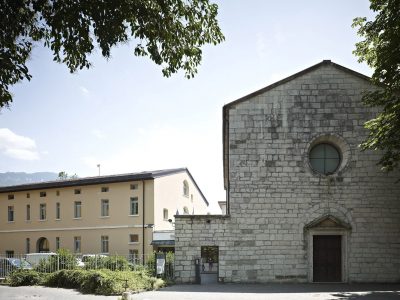 The seminar intends to offer some reflections on solitude and communion through the lens of Marie-Dominique Chenu, an eminent historian of medieval theology and philosophy, as well as an "intellectuel engagé" active in Paris in the labor movement during the 1940s.
 -
 Elena Nieto Hernandez, Andrea Bonzi and Gianpietro Maddinelli are taking part in the largest conference dedicated to the world of single photons, from generation and detection technologies to their applications
 -
 Rossana Dell’Anna, Sara Hejazi, and Richard Hall-Wilton participate in the 9th edition of the European Academy of Religion’s Conference on Religion and (In)equalities (EuARe2026), in a panel that seeks to explore non-dualism as a cross-cutting paradigm between physics and metaphysics, capable of fostering fruitful dialogue across disciplines and religious traditions that are often perceived as distant from one another.
 -
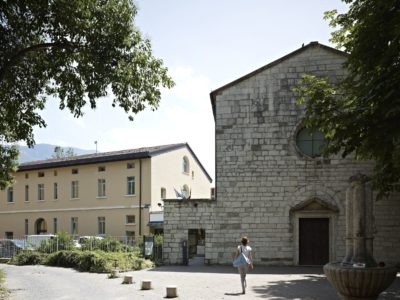 Researchers from the FBK Center for Religious Studies are participating in several open panels at the 9th Conference of European Academy of Religion (EuARe), “Religion and (In)equalities”
 -
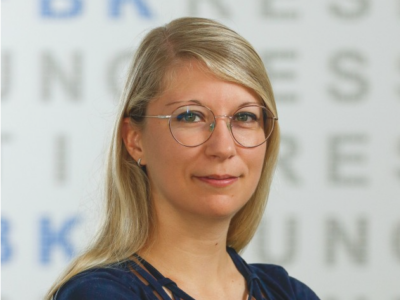 Federica Mantegazzini is speaking at Speck&Tech 86: ‘Qubit or not Qubit?’, an event dedicated to quantum computing, to explain how quantum computers work, what sets them apart from traditional computers, and what opportunities they might offer in the future. An accessible introduction to one of the most innovative frontiers of contemporary technology.