SUPERTIMBER: The wood that aims to rival steel
Years of research into biomaterials have led to the development of a sustainable alternative to conventional materials without compromising performance. The result is an enhanced natural material with potential applications across a wide range of sectors, from timber high-rises and musical instruments to ultralight, high-performance skis and new approaches to sustainable mobility.
At the heart of SUPERTIMBER is Paulownia, also known as Kiri. With a density of approximately 250–300 kg/m³, it is one of the lightest woods and comes from one of the world’s fastest-growing tree species. Paulownia can grow more than five meters in a year and absorbs significant amounts of CO₂ . Using this wood as a starting material, researchers at Fondazione Bruno Kessler and the X-Lam Dolomiti team developed SUPERTIMBER through an innovative industrial densification process that is currently being patented.
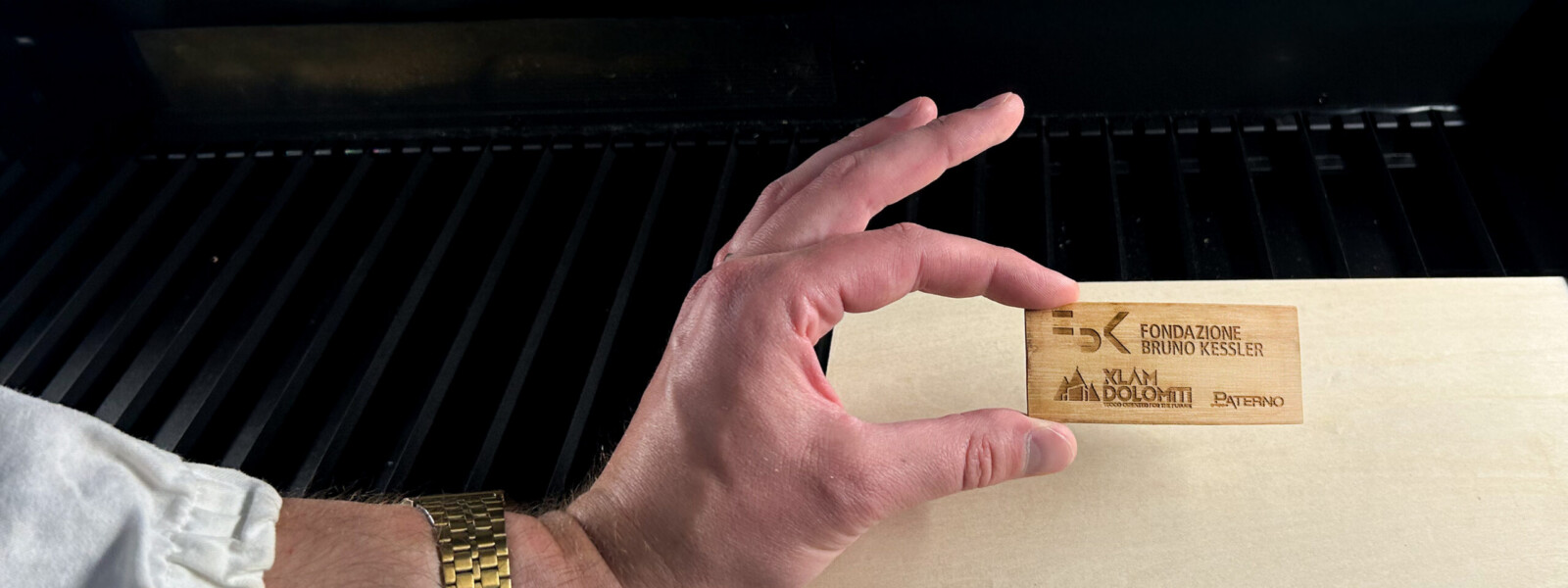
Following extensive testing and experimentation, the team produced the first SUPERTIMBER board, achieving a density of more than 1,000 kg/m³ while retaining the ability to be worked using conventional manufacturing methods. It also offers specific strength comparable to steel while remaining lightweight.
Sustainability is another key aspect of the material. Paulownia can regrow after harvesting without having to be replanted, while the wood continues to store the carbon absorbed by the tree during its growth. “In recent years, I have seen the project team develop significantly, not only in its understanding of the material but also in its ability to continually generate new ideas and use them to support technology transfer to X-Lam Dolomiti,” said David Novel, researcher and head of the Sensor, Packaging & Integration (SPIN) unit within FBK’s Center for Sensors & Devices. “Research on SUPERTIMBER has been a long journey involving prototypes, testing, and failures, with several thousand samples analyzed,” Novel continued. “We learned that the solution that performs best from a scientific standpoint is not always the one best suited to industrial implementation. For us, SUPERTIMBER has been more than a scientific achievement: it has also led to the creation of a dedicated team and laboratory, as well as new expertise capable of connecting research, industry, and sustainability.”
SUPERTIMBER was developed as part of the SU.PRE.MO project, supported by the Autonomous Province of Trento and led by X-Lam Dolomiti in collaboration with FBK laboratories.
A first application was presented at the Fuorisalone in Milan as a demonstration of the material’s potential, in an installation designed by MM Design. Its characteristics—lightness, strength, and a negative carbon footprint—make it a potential alternative to metals in numerous applications, opening opportunities that extend beyond design and into construction and industrial manufacturing.